
Another Response to Richard Gill's 10,000 Euros Challenge
Re: Another Response to Richard Gill's 10,000 Euros Challeng
 by Heinera » Sun Jun 08, 2014 9:39 am
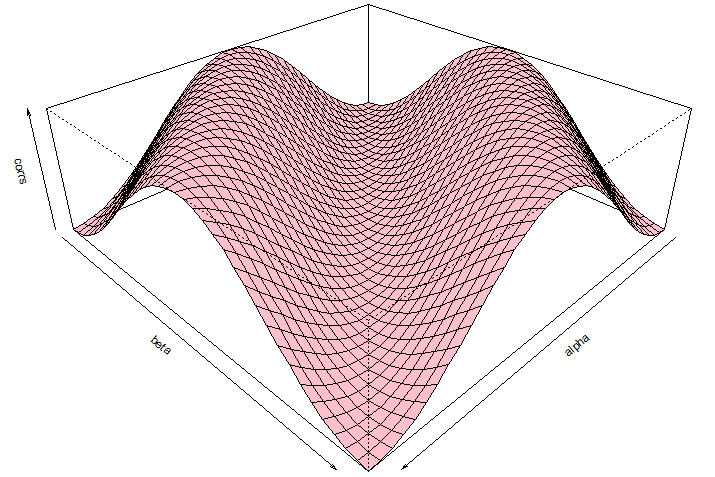
If Alice will only ever see the "good" u directions, can she use them to compute the outcomes for any detector setting she may choose?
- Heinera
- Posts: 917
- Joined: Thu Feb 06, 2014 1:50 am
Re: Another Response to Richard Gill's 10,000 Euros Challeng
by Joy Christian » Sun Jun 08, 2014 9:48 am
Heinera wrote:If Alice will only ever see the "good" u directions, can she use them to compute the outcomes for any detector setting she may choose?
http://rpubs.com/jjc/19298
- Joy Christian
- Research Physicist
- Posts: 2793
- Joined: Wed Feb 05, 2014 4:49 am
- Location: Oxford, United Kingdom
Re: Another Response to Richard Gill's 10,000 Euros Challeng
by Heinera » Sun Jun 08, 2014 10:01 am
But this graph uses a different set of "good" u directions for each detector setting. So will Alice be presented with a lot of different sets of u directions, and then she has to pick a particular set depending on her choice of detector setting?
- Heinera
- Posts: 917
- Joined: Thu Feb 06, 2014 1:50 am
Re: Another Response to Richard Gill's 10,000 Euros Challeng
by Joy Christian » Sun Jun 08, 2014 10:06 am
Heinera wrote:But this graph uses a different set of "good" u directions for each detector setting. So will Alice be presented with a lot of different sets of u directions, and then she has to pick a particular set depending on her choice of detector setting?
http://arxiv.org/abs/1405.2355
- Joy Christian
- Research Physicist
- Posts: 2793
- Joined: Wed Feb 05, 2014 4:49 am
- Location: Oxford, United Kingdom
Re: Another Response to Richard Gill's 10,000 Euros Challeng
by gill1109 » Sun Jun 08, 2014 11:07 am
Christian has entered two particular files of directions for the challenge (well before June 11). I have used these to calculate the four correlations according to the challenge protocol. It's of no concern to me how the directions were generated and what beautiful pictures can be drawn with other sets. I determined that the data-sets failed the test. Christian has registered his disagreement. So we proceed to recruit adjudicators, according to agreed procedure. I hope the persons we have in mind are prepared to independently verify my calculation. They just have to let us know what four correlations they find, using the agreed formulas.
- gill1109
- Mathematical Statistician
- Posts: 2812
- Joined: Tue Feb 04, 2014 10:39 pm
- Location: Leiden
Re: Another Response to Richard Gill's 10,000 Euros Challeng
by Joy Christian » Sun Jun 08, 2014 11:40 am
Earlier today I sent the following email notice to Richard, which was copied to Andrei Khrennikov, Hans de Raedt, and Gregor Weihs.
Joy Christian wrote:
Richard,
Based on the evidence I have presented in my previous email as well as at the following link, I formally request adjudication on my response to your 10,000 Euros challenge (which I believe I have won multiple times by now):
viewtopic.php?f=6&t=64&p=2736#p2730
Best regards,
Joy
- Joy Christian
- Research Physicist
- Posts: 2793
- Joined: Wed Feb 05, 2014 4:49 am
- Location: Oxford, United Kingdom
Re: Another Response to Richard Gill's 10,000 Euros Challeng
by Heinera » Sun Jun 08, 2014 11:45 am
Have a nice and interesting week in Växjö, Richard! Wonderful place...in the middle of this seemingly endless Swedish spruce forest.
To bad Joy Christian couldn't make it there this year.
To bad Joy Christian couldn't make it there this year.
- Heinera
- Posts: 917
- Joined: Thu Feb 06, 2014 1:50 am
Re: Another Response to Richard Gill's 10,000 Euros Challeng
by FrediFizzx » Sun Jun 08, 2014 11:53 am
The most important thing here is the fact that the experiment is viable. Basically what the adjudicators have to decide is what is the correct way to calculate the correlations. Of course if the calculations are done in flatland, you will get Bell. If the calculations are done in a way that respects 3-sphere geometry, then Bell is violated as can be seen by the simulations. I believe there is only one way to find out which is correct. The experiment should be done. It will sort it all out.
- FrediFizzx
- Independent Physics Researcher
- Posts: 2905
- Joined: Tue Mar 19, 2013 7:12 pm
- Location: N. California, USA
Re: Another Response to Richard Gill's 10,000 Euros Challeng
by Heinera » Sun Jun 08, 2014 12:22 pm
FrediFizzx wrote:The most important thing here is the fact that the experiment is viable. Basically what the adjudicators have to decide is what is the correct way to calculate the correlations. Of course if the calculations are done in flatland, you will get Bell. If the calculations are done in a way that respects 3-sphere geometry, then Bell is violated as can be seen by the simulations. I believe there is only one way to find out which is correct. The experiment should be done. It will sort it all out.
Don't you think the correlations should be calculated in exactly the same way that experimenters calculate it? So that we have something to compare with?
- Heinera
- Posts: 917
- Joined: Thu Feb 06, 2014 1:50 am
Re: Another Response to Richard Gill's 10,000 Euros Challeng
by Joy Christian » Sun Jun 08, 2014 12:32 pm
Heinera wrote:Don't you think the correlations should be calculated in exactly the same way that experimenters calculate it? So that we have something to compare with?
http://rpubs.com/jjc/19298:
alpha <- 0 * pi/180
beta <- 45 * pi/180
a <- c(cos(alpha), sin(alpha))
b <- c(cos(beta), sin(beta))
ca <- colSums(u * a) ## Inner products of cols of 'u' with 'a'
cb <- colSums(u * b) ## Inner products of cols of 'u' with 'b'
(E_0_45 <- sum(sign(ca) * sign(-cb))/N)
## [1] -0.6993
alpha <- 0 * pi/180
beta <- 135 * pi/180
a <- c(cos(alpha), sin(alpha))
b <- c(cos(beta), sin(beta))
ca <- colSums(u * a) ## Inner products of cols of 'u' with 'a'
cb <- colSums(u * b) ## Inner products of cols of 'u' with 'b'
(E_0_135 <- sum(sign(ca) * sign(-cb))/N)
## [1] 0.703
alpha <- 90 * pi/180
beta <- 45 * pi/180
a <- c(cos(alpha), sin(alpha))
b <- c(cos(beta), sin(beta))
ca <- colSums(u * a) ## Inner products of cols of 'u' with 'a'
cb <- colSums(u * b) ## Inner products of cols of 'u' with 'b'
(E_90_45 <- sum(sign(ca) * sign(-cb))/N)
## [1] -0.699
alpha <- 90 * pi/180
beta <- 135 * pi/180
a <- c(cos(alpha), sin(alpha))
b <- c(cos(beta), sin(beta))
ca <- colSums(u * a) ## Inner products of cols of 'u' with 'a'
cb <- colSums(u * b) ## Inner products of cols of 'u' with 'b'
(E_90_135 <- sum(sign(ca) * sign(-cb))/N)
## [1] -0.7276
## The Bell-CHSH inequality is violated:
abs(E_0_45 - E_0_135 + E_90_45 + E_90_135)
## [1] 2.829
- Joy Christian
- Research Physicist
- Posts: 2793
- Joined: Wed Feb 05, 2014 4:49 am
- Location: Oxford, United Kingdom
Re: Another Response to Richard Gill's 10,000 Euros Challeng
by FrediFizzx » Sun Jun 08, 2014 12:33 pm
Heinera wrote:Don't you think the correlations should be calculated in exactly the same way that experimenters calculate it? So that we have something to compare with?
This brings up Richard's question about "s". It's a hidden variable and nature will provide it and "p". So for the purposes of the simulation, "s" and "p" are needed and the correlation calculations have to be done using them. In the real experiment, nature will provide them and the correlations will be calculated as Joy has specified in his paper and Richard agreed to. That is the difference.
- FrediFizzx
- Independent Physics Researcher
- Posts: 2905
- Joined: Tue Mar 19, 2013 7:12 pm
- Location: N. California, USA
Re: Another Response to Richard Gill's 10,000 Euros Challeng
by Heinera » Sun Jun 08, 2014 1:18 pm
FrediFizzx wrote:Heinera wrote:Don't you think the correlations should be calculated in exactly the same way that experimenters calculate it? So that we have something to compare with?
This brings up Richard's question about "s". It's a hidden variable and nature will provide it and "p". So for the purposes of the simulation, "s" and "p" are needed and the correlation calculations have to be done using them. In the real experiment, nature will provide them and the correlations will be calculated as Joy has specified in his paper and Richard agreed to. That is the difference.
But if "s" (and "p") are hidden to us, how can we use them when calculating the correlations? Because it is we that are calculating the correlations, and not nature, correct?
- Heinera
- Posts: 917
- Joined: Thu Feb 06, 2014 1:50 am
Re: Another Response to Richard Gill's 10,000 Euros Challeng
by FrediFizzx » Sun Jun 08, 2014 1:35 pm
Heinera wrote:But if "s" (and "p") are hidden to us, how can we use them when calculating the correlations? Because it is we that are calculating the correlations, and not nature, correct?
In the real experiment, you don't need them for calculating the correlations. Nature provides them and the correlations are calculated the way Richard wants to do them for the simulation and that Joy agreed to but shouldn't have. But they are needed in the simulation correlation calculations because we are trying to simulate Nature. Get it now?
- FrediFizzx
- Independent Physics Researcher
- Posts: 2905
- Joined: Tue Mar 19, 2013 7:12 pm
- Location: N. California, USA
Re: Another Response to Richard Gill's 10,000 Euros Challeng
by Heinera » Sun Jun 08, 2014 2:09 pm
FrediFizzx wrote:Nature provides them and the correlations are calculated the way Richard wants to do them for the simulation and that Joy agreed to but shouldn't have. But they are needed in the simulation correlation calculations because we are trying to simulate Nature. Get it now?
No....
 What is it that Joy shouldn't have agreed to?
- Heinera
- Posts: 917
- Joined: Thu Feb 06, 2014 1:50 am
Re: Another Response to Richard Gill's 10,000 Euros Challeng
by FrediFizzx » Sun Jun 08, 2014 2:25 pm
Heinera wrote:FrediFizzx wrote:Nature provides them and the correlations are calculated the way Richard wants to do them for the simulation and that Joy agreed to but shouldn't have. But they are needed in the simulation correlation calculations because we are trying to simulate Nature. Get it now?
No....
Let me put it this way; What Joy wrote in this paper about the real experiment is correct. The fact that Richard wants to calculate the correlations for the simulation the same way as for the real experiment like Joy said in the paper is not correct. That is what Joy should not have agreed to since the correlations for the simulation have to have "s" and "p" involved to simulate what we think Nature is doing.
- FrediFizzx
- Independent Physics Researcher
- Posts: 2905
- Joined: Tue Mar 19, 2013 7:12 pm
- Location: N. California, USA
Re: Another Response to Richard Gill's 10,000 Euros Challeng
by Heinera » Sun Jun 08, 2014 2:44 pm
OK. But isn't the simulation suposed to actually simulate what is going on in the experiment? If the correlations must be computed in two very different ways in the simulation vs. the experiment, what is then the point of the simulation?
- Heinera
- Posts: 917
- Joined: Thu Feb 06, 2014 1:50 am
Re: Another Response to Richard Gill's 10,000 Euros Challeng
by Joy Christian » Sun Jun 08, 2014 2:59 pm
FrediFizzx wrote:Let me put it this way; What Joy wrote in this paper about the real experiment is correct. The fact that Richard wants to calculate the correlations for the simulation the same way as for the real experiment like Joy said in the paper is not correct. That is what Joy should not have agreed to since the correlations for the simulation have to have "s" and "p" involved to simulate what we think Nature is doing.
I see nothing wrong with the way I have calculated the four correlations in this simulation: http://rpubs.com/jjc/19298:
alpha <- 0 * pi/180
beta <- 45 * pi/180
a <- c(cos(alpha), sin(alpha))
b <- c(cos(beta), sin(beta))
ca <- colSums(u * a) ## Inner products of cols of 'u' with 'a'
cb <- colSums(u * b) ## Inner products of cols of 'u' with 'b'
(E_0_45 <- sum(sign(ca) * sign(-cb))/N)
## [1] -0.6993
alpha <- 0 * pi/180
beta <- 135 * pi/180
a <- c(cos(alpha), sin(alpha))
b <- c(cos(beta), sin(beta))
ca <- colSums(u * a) ## Inner products of cols of 'u' with 'a'
cb <- colSums(u * b) ## Inner products of cols of 'u' with 'b'
(E_0_135 <- sum(sign(ca) * sign(-cb))/N)
## [1] 0.703
alpha <- 90 * pi/180
beta <- 45 * pi/180
a <- c(cos(alpha), sin(alpha))
b <- c(cos(beta), sin(beta))
ca <- colSums(u * a) ## Inner products of cols of 'u' with 'a'
cb <- colSums(u * b) ## Inner products of cols of 'u' with 'b'
(E_90_45 <- sum(sign(ca) * sign(-cb))/N)
## [1] -0.699
alpha <- 90 * pi/180
beta <- 135 * pi/180
a <- c(cos(alpha), sin(alpha))
b <- c(cos(beta), sin(beta))
ca <- colSums(u * a) ## Inner products of cols of 'u' with 'a'
cb <- colSums(u * b) ## Inner products of cols of 'u' with 'b'
(E_90_135 <- sum(sign(ca) * sign(-cb))/N)
## [1] -0.7276
## The Bell-CHSH inequality is violated:
abs(E_0_45 - E_0_135 + E_90_45 + E_90_135)
## [1] 2.829
These calculations are fully consistent with the terms of the Gill challenge. The same N is used for all four calculations, and only the standard dot product is used. That is what Gill has been demanding all along. As far as I can see, the reason why he gets his results wrong is because he is doing the calculations incorrectly.
- Joy Christian
- Research Physicist
- Posts: 2793
- Joined: Wed Feb 05, 2014 4:49 am
- Location: Oxford, United Kingdom
Re: Another Response to Richard Gill's 10,000 Euros Challeng
by FrediFizzx » Sun Jun 08, 2014 4:12 pm
Heinera wrote:OK. But isn't the simulation suposed to actually simulate what is going on in the experiment? If the correlations must be computed in two very different ways in the simulation vs. the experiment, what is then the point of the simulation?
How would you simulate what nature is doing in the simulation if nature does have 3-sphere geometry involved? It will be automatically passed on in the real experiment. In the simulation it has to be simulated via the correlation calculations. I am sure that Richard already understands this perfectly well. He only had a question about "s" and "p" left to ponder and that question has been answered.
- FrediFizzx
- Independent Physics Researcher
- Posts: 2905
- Joined: Tue Mar 19, 2013 7:12 pm
- Location: N. California, USA
Re: Another Response to Richard Gill's 10,000 Euros Challeng
by FrediFizzx » Sun Jun 08, 2014 6:33 pm
Joy Christian wrote:These calculations are fully consistent with the terms of the Gill challenge. The same N is used for all four calculations, and only the standard dot product is used. That is what Gill has been demanding all along. As far as I can see, the reason why he gets his results wrong is because he is doing the calculations incorrectly.
Richard is doing the calculations correctly for flatland; which is wrong for the proper simulation of the experiment. And you are doing them in a way that respects the 3-sphere geometry necessary for the proper simulation of the experiment. So I suppose it is up to the adjudicators now.
- FrediFizzx
- Independent Physics Researcher
- Posts: 2905
- Joined: Tue Mar 19, 2013 7:12 pm
- Location: N. California, USA
Re: Another Response to Richard Gill's 10,000 Euros Challeng
by gill1109 » Sun Jun 08, 2014 7:58 pm
There are two separate issues here.
(1) What should experimenters do who actually perform Christian's experiment?
(2) What should adjudicators of our little challenge do?
*******
(1): what should experimenters do who actually perform Christian's experiment?
Well, it's not my job to tell them that; it's Christian's job. In fact he already did it in 2008, in http://arxiv.org/abs/0806.3078.
But I do see two things they could do.
Suppose that altogether, say, N = 6912 pairs of particles have been measured in a real experiment. Suppose their pairs of directions of angular momentum are more or less equal and opposite and uniformly distributed over S^2. They store them in computer files and call them u and v.
Suppose they want to calculate E(a, b).
Then either they could calculate
E(a, b | classical) = 1/N sum_{i=1}^N sign(a . u_i) sign(b . v_i)
and they'll see a classical correlation, or they can fire up R on their computer, read in the directions u and v, generate random numbers s = runif(N, 0, pi) and then p = 1.21 * (-1 + (2/(sqrt(1 + (3 * s/pi))))), and then for the given a and b calculate
ca = colSums(u * a) ## Inner products of cols of 'u' with 'a'
cb =colSums(u * b) ## Inner products of cols of 'u' with 'b'
good = abs(ca) > p & abs(cb) > p ## Sets the topology to that of S^3
which is a subset of the original set of particles, and which depends on what a and b they are looking at. Call it good(a, b).
Now they calculate N(a, b) = # "good(a, b)" and
E(a, b | quantum) = 1/N(a, b) sum_{i in good(a, b)} sign(a . u_i) sign(b . v_i)
If Christian would like the experimenters to see quantum correlations he had better tell them how to get them.
I suggest he revises his experimental paper because I see no mention of "p = 1.21 * (-1 + (2/(sqrt(1 + (3 * s/pi)))))" in that paper. As far as I know this formula was derived by Richard Gill in 2014 and communicated by him to J. Christian, long after the two guys had started talking about a bet about Christian's experiment. Maybe a year before that, Gill and Diether had had a heated discussion at the FQXi forum about the experimental paper, which actually led to this present forum being founded. At that point in time neither Gill, Diether or Christian had dreamed up the formula p = 1.21 * (-1 + (2/(sqrt(1 + (3 * s/pi))))).
Since I'm not a physicist but just a mathematician (and in fact, merely a statistician at that), I have no opinion whatsoever as to what experimenters should do, nor about what this all tells us about the geometry of space-time.
*****
(2) What should adjudicators of our little challenge do?
The adjudicators have to read the protocol of the challenge, download the submitted files AliceDirections.txt and BobDirections.txt, and calculate E(a, b | classical) for the four pairs of directions specified there. Because that's what the protocol of the challenge tells them they have to do.
Then they have to tell us if they see classical or quantum correlations.
Since I'm a decent R programmer (damn it, I essentially wrote Christian's simulation model for him!) I know pretty much for sure that I will keep my 10 000 Euro, so I am not in a big hurry about all this. Right now I am enjoying a Scandinavian summer night in Copenhagen. Tomorrow morning I have to essentially walk over the Oresund bridge to get into Sweden (but I suppose I could also swim) since there is a train strike and Europe is cut off from the Swedish spruce forests. That's a good thing (about the 10 000 Euro) because during my last vacation (on Rügen) I ripped open the oil reservoir at the bottom of my hire care driving on what might euphemistically be called a "country lane" and had some unexpected major extra expenses, not covered by insurance ...
(1) What should experimenters do who actually perform Christian's experiment?
(2) What should adjudicators of our little challenge do?
*******
(1): what should experimenters do who actually perform Christian's experiment?
Well, it's not my job to tell them that; it's Christian's job. In fact he already did it in 2008, in http://arxiv.org/abs/0806.3078.
But I do see two things they could do.
Suppose that altogether, say, N = 6912 pairs of particles have been measured in a real experiment. Suppose their pairs of directions of angular momentum are more or less equal and opposite and uniformly distributed over S^2. They store them in computer files and call them u and v.
Suppose they want to calculate E(a, b).
Then either they could calculate
E(a, b | classical) = 1/N sum_{i=1}^N sign(a . u_i) sign(b . v_i)
and they'll see a classical correlation, or they can fire up R on their computer, read in the directions u and v, generate random numbers s = runif(N, 0, pi) and then p = 1.21 * (-1 + (2/(sqrt(1 + (3 * s/pi))))), and then for the given a and b calculate
ca = colSums(u * a) ## Inner products of cols of 'u' with 'a'
cb =colSums(u * b) ## Inner products of cols of 'u' with 'b'
good = abs(ca) > p & abs(cb) > p ## Sets the topology to that of S^3
which is a subset of the original set of particles, and which depends on what a and b they are looking at. Call it good(a, b).
Now they calculate N(a, b) = # "good(a, b)" and
E(a, b | quantum) = 1/N(a, b) sum_{i in good(a, b)} sign(a . u_i) sign(b . v_i)
If Christian would like the experimenters to see quantum correlations he had better tell them how to get them.
I suggest he revises his experimental paper because I see no mention of "p = 1.21 * (-1 + (2/(sqrt(1 + (3 * s/pi)))))" in that paper. As far as I know this formula was derived by Richard Gill in 2014 and communicated by him to J. Christian, long after the two guys had started talking about a bet about Christian's experiment. Maybe a year before that, Gill and Diether had had a heated discussion at the FQXi forum about the experimental paper, which actually led to this present forum being founded. At that point in time neither Gill, Diether or Christian had dreamed up the formula p = 1.21 * (-1 + (2/(sqrt(1 + (3 * s/pi))))).
Since I'm not a physicist but just a mathematician (and in fact, merely a statistician at that), I have no opinion whatsoever as to what experimenters should do, nor about what this all tells us about the geometry of space-time.
*****
(2) What should adjudicators of our little challenge do?
The adjudicators have to read the protocol of the challenge, download the submitted files AliceDirections.txt and BobDirections.txt, and calculate E(a, b | classical) for the four pairs of directions specified there. Because that's what the protocol of the challenge tells them they have to do.
Then they have to tell us if they see classical or quantum correlations.
Since I'm a decent R programmer (damn it, I essentially wrote Christian's simulation model for him!) I know pretty much for sure that I will keep my 10 000 Euro, so I am not in a big hurry about all this. Right now I am enjoying a Scandinavian summer night in Copenhagen. Tomorrow morning I have to essentially walk over the Oresund bridge to get into Sweden (but I suppose I could also swim) since there is a train strike and Europe is cut off from the Swedish spruce forests. That's a good thing (about the 10 000 Euro) because during my last vacation (on Rügen) I ripped open the oil reservoir at the bottom of my hire care driving on what might euphemistically be called a "country lane" and had some unexpected major extra expenses, not covered by insurance ...
- gill1109
- Mathematical Statistician
- Posts: 2812
- Joined: Tue Feb 04, 2014 10:39 pm
- Location: Leiden
Return to Sci.Physics.Foundations
Who is online
Users browsing this forum: No registered users and 31 guests